Data Art
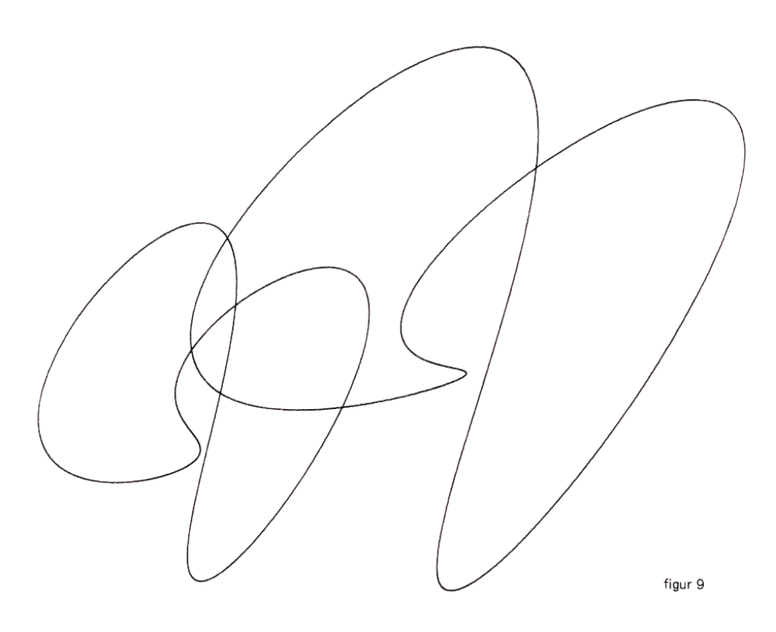
While this digital squiggle may not look like much next to sculptures in bronze and carefully balanced mobiles, it represents a final freedom for Tinsbo. The hole acted on the lump, finally stretching into an edge, which became nothing more than a wire with the mobiles. Here, that thin remnant of the lump, is finally discarded. It becomes a line.
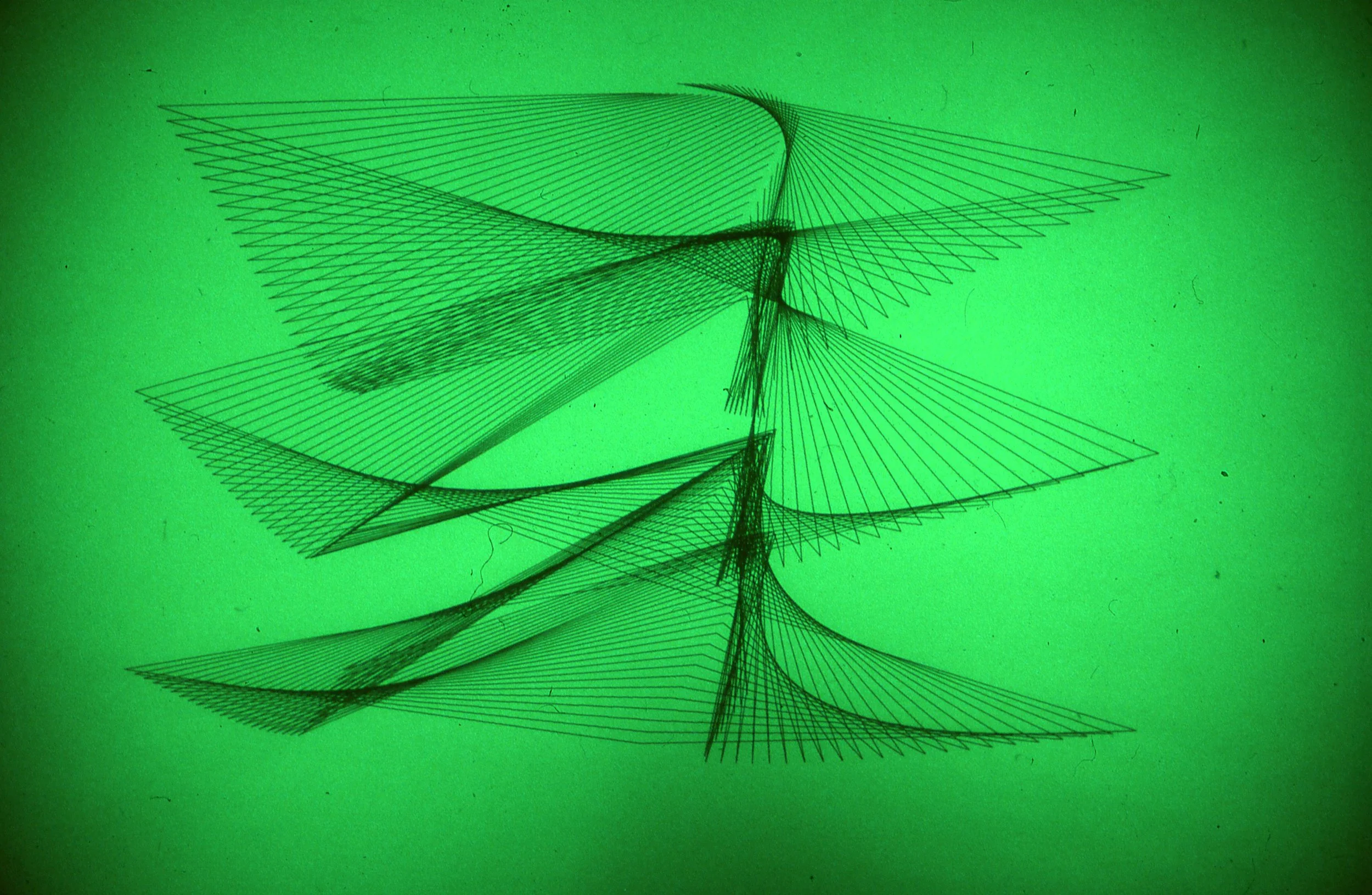
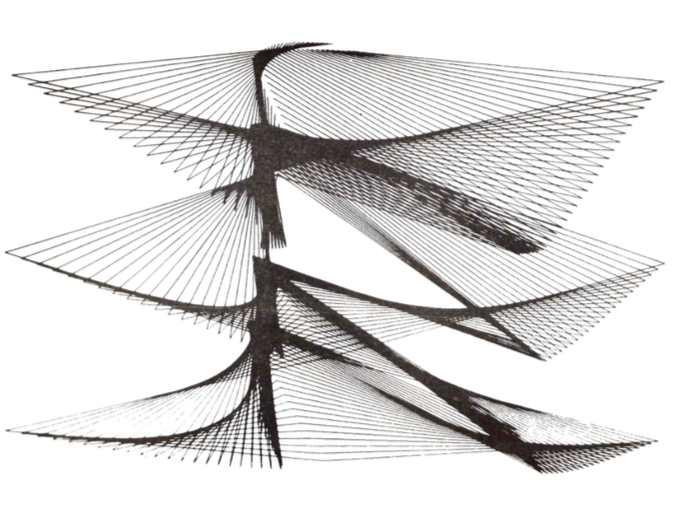
The line records a moment when Tinsbo was at the avant-garde of international art, part of a group of artists engaging with the earliest forms of data art emerging from centres of technological innovation, from São Paulo to Zagreb to Tokyo. Tinsbo entered a collaboration with computer engineer Peter Bording in the early 1970s to create these works.
After Bording’s death in 1975, Tinsbo’s data art came to an end. But this experimentation was hugely influential on his sculpture and installation practice. As Tinsbo himself said in his 1991 interview, he describes his work with “spaces…and mirrors” as the “continuation of [the]…’concept of thought’” stemming from computer art, “concerning space and the things we experience and have learned to experience.”
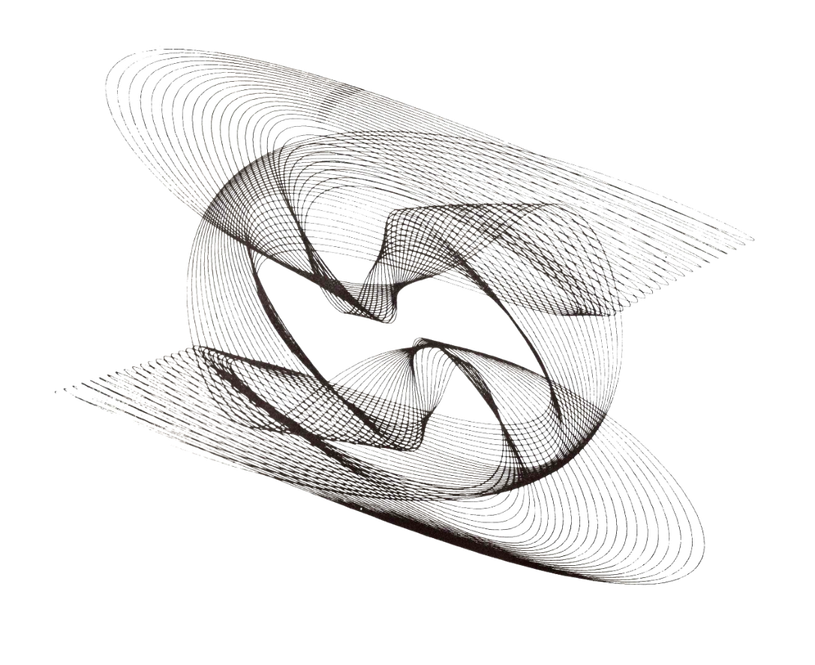
The idea that the hand of the artist could be overruled in this way and be distilled into a series of 0s and 1s posed an existential threat to the art establishment. For Tinsbo however, far from being threatening, the computer was tantalising. Like the hole, it was powerful and unpredictable.
By manipulating the input in the computer program, Tinsbo and Bording could select a curve that was appealing to them, or, they could allow “the computer to complete the drawing.” Radically, the computer offered the possibility of absenting themselves altogether.
The unpredictability of the computer program mirrored the power and unpredictability of space; the force that had captivated Tinsbo since the first appearance of the hole.