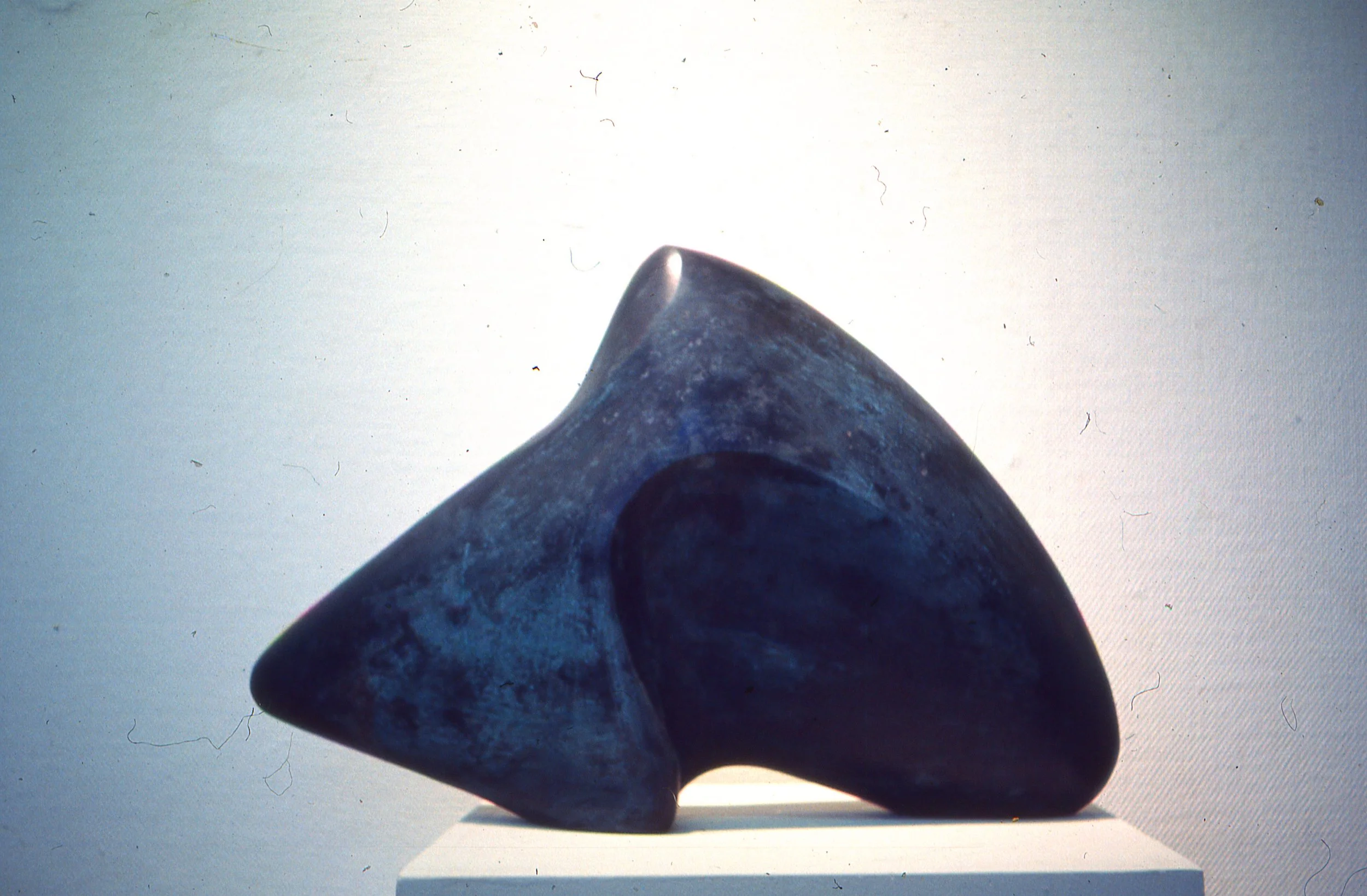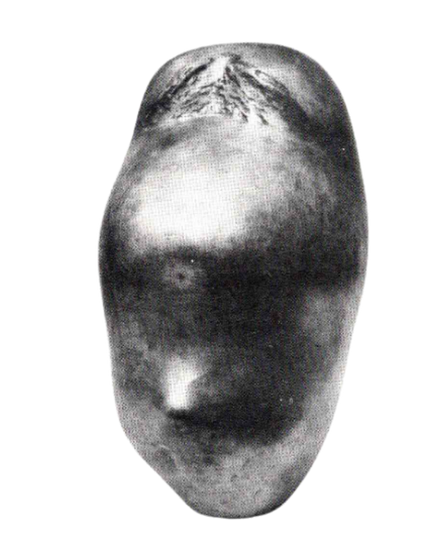
the Lump
The hole that appeared suddenly one day in Tinsbo’s work acted against what the artist calls klumpen, the lump. This is the “massive ‘thing’” that forms the raw material of a sculpture. Tinsbo’s early representational sculptures in plaster and bronze illustrate klumpen as he saw it; these works express “density, pressure and strength” as Tinsbo described. These forms are heavy and authoritative. They are placed in space, rather than interacting with it.
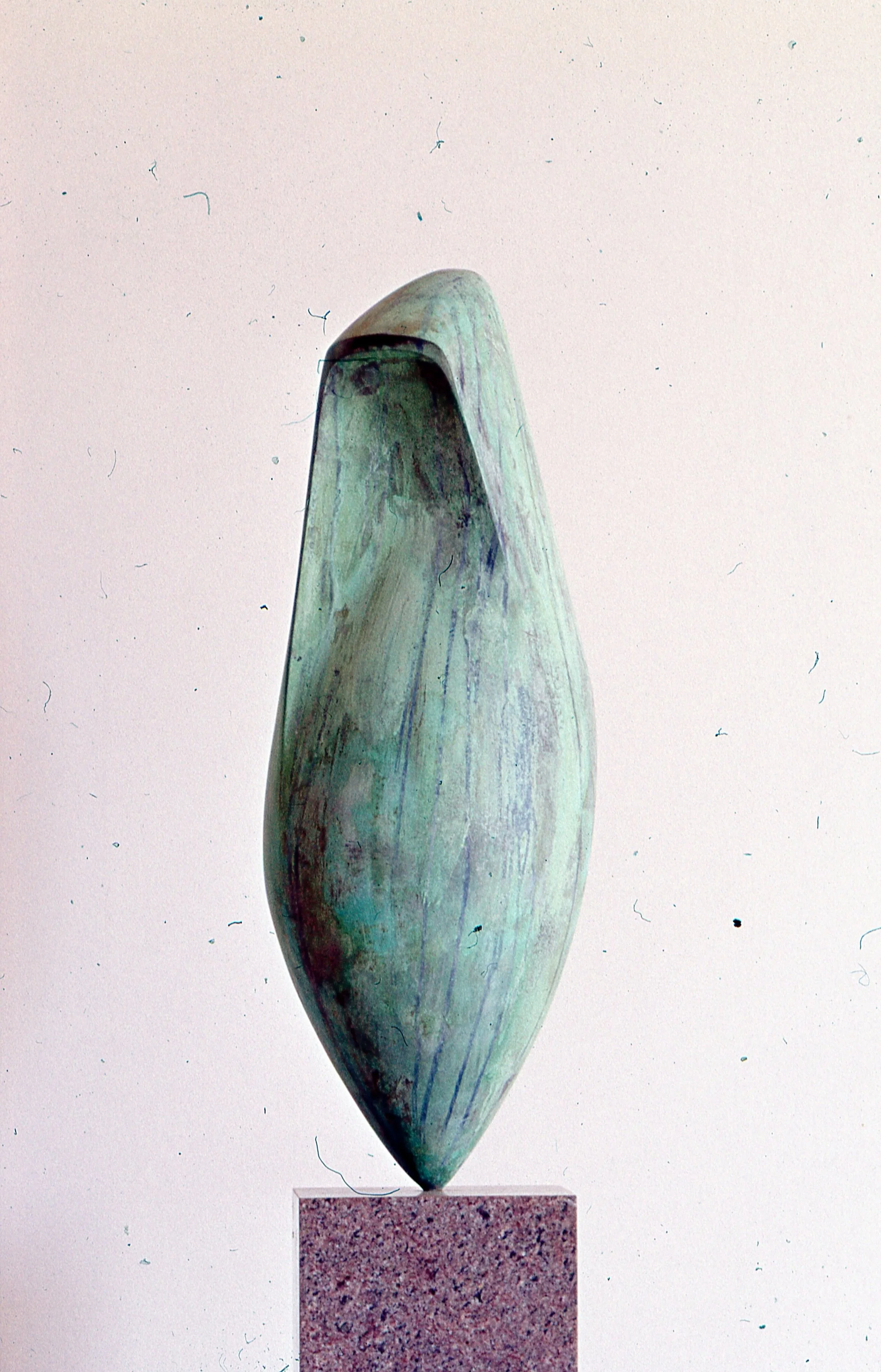
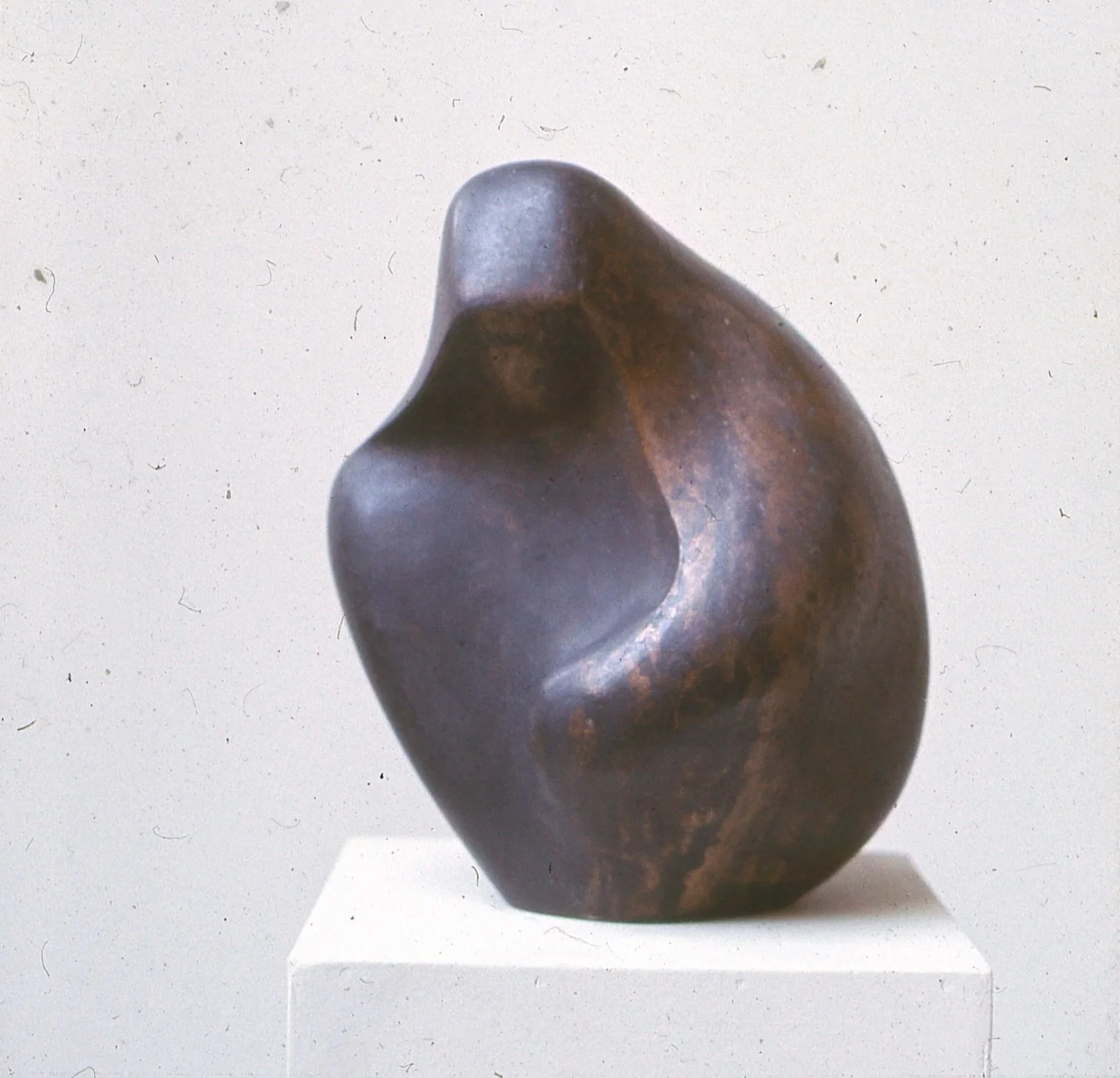
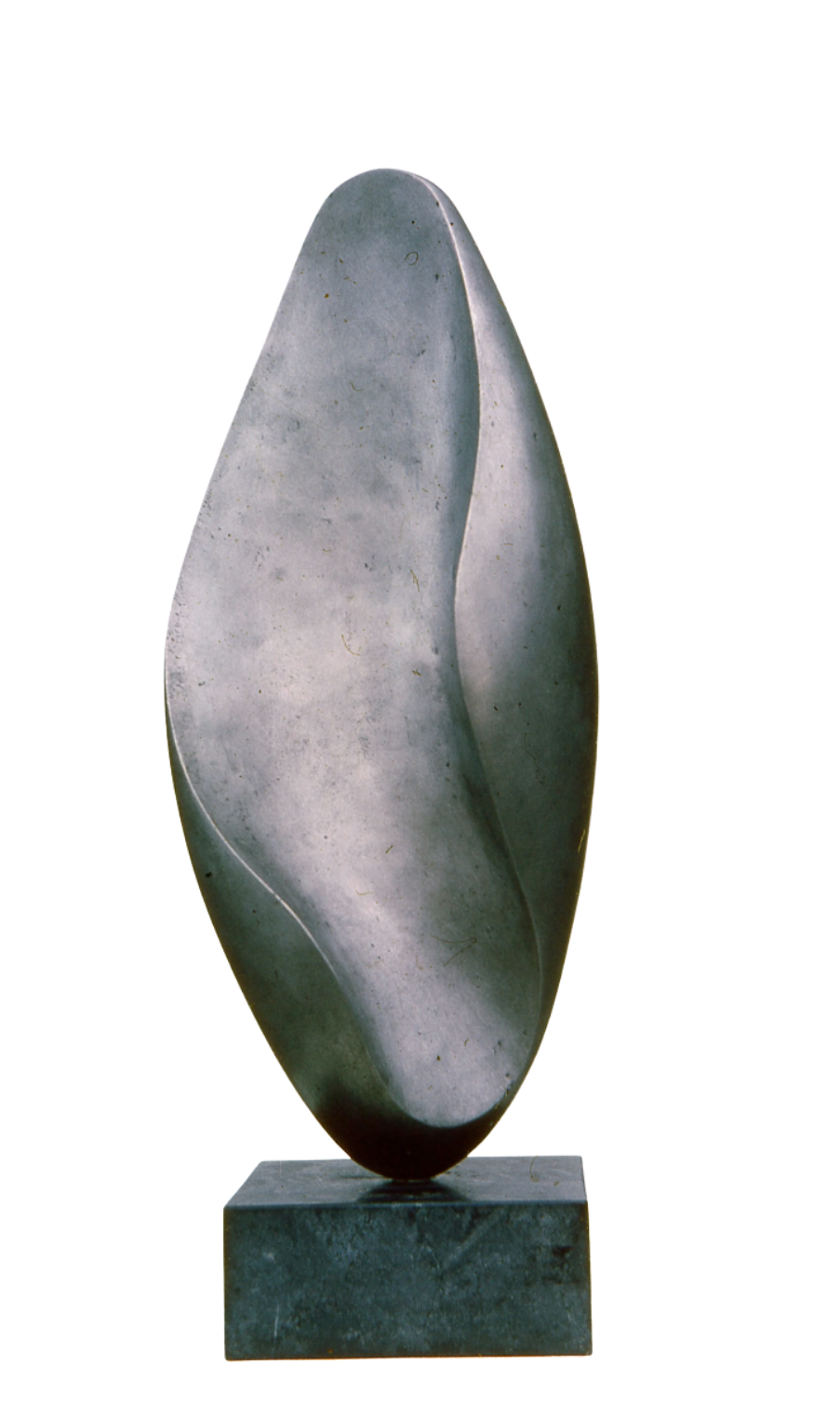
Once the hole starts acting on Tinsbo’s sculptures, it struggles with and against the lump. This image distills a problem at the centre of all sculpture; the tension between space and form. Radically, in Tinsbo’s work, space presses back against sculpture. For Tinsbo, sculpture is not something you create, but a negotiation with space.
Anders Tinsbo, Flammen, 1963
The first negotiations between the lump and the hole can be seen in one of Tinsbo’s first commissioned sculptures, his 1963 Flammen, or, The Flame, 1963.
While this sculpture is modest in scale and material, it breaks dramatically from the representational sculptures Tinsbo had been making as a student. The title animates the sculpture, as does the effects of light on the tin surface. We might imagine the smooth, curved edge of the “flame” flickering.
Flammen also introduces a central element of Tinsbo’s sculpture; the balance between concave and convex forms. Here, the corners of the sculpture lick inwards towards each other, at the same time as a void is created at the centre of the form. The hole was beginning to emerge.