Vandkunst
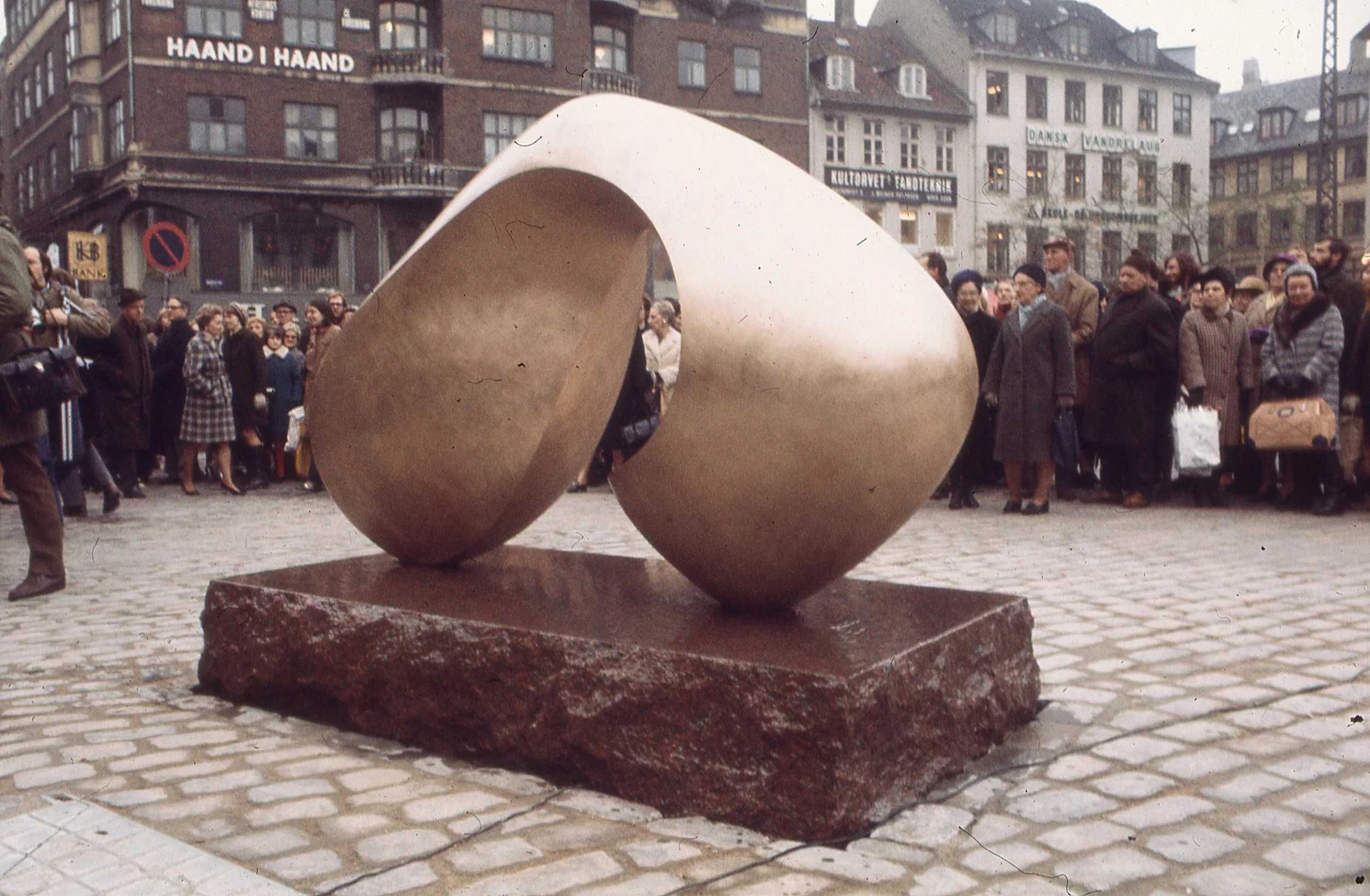
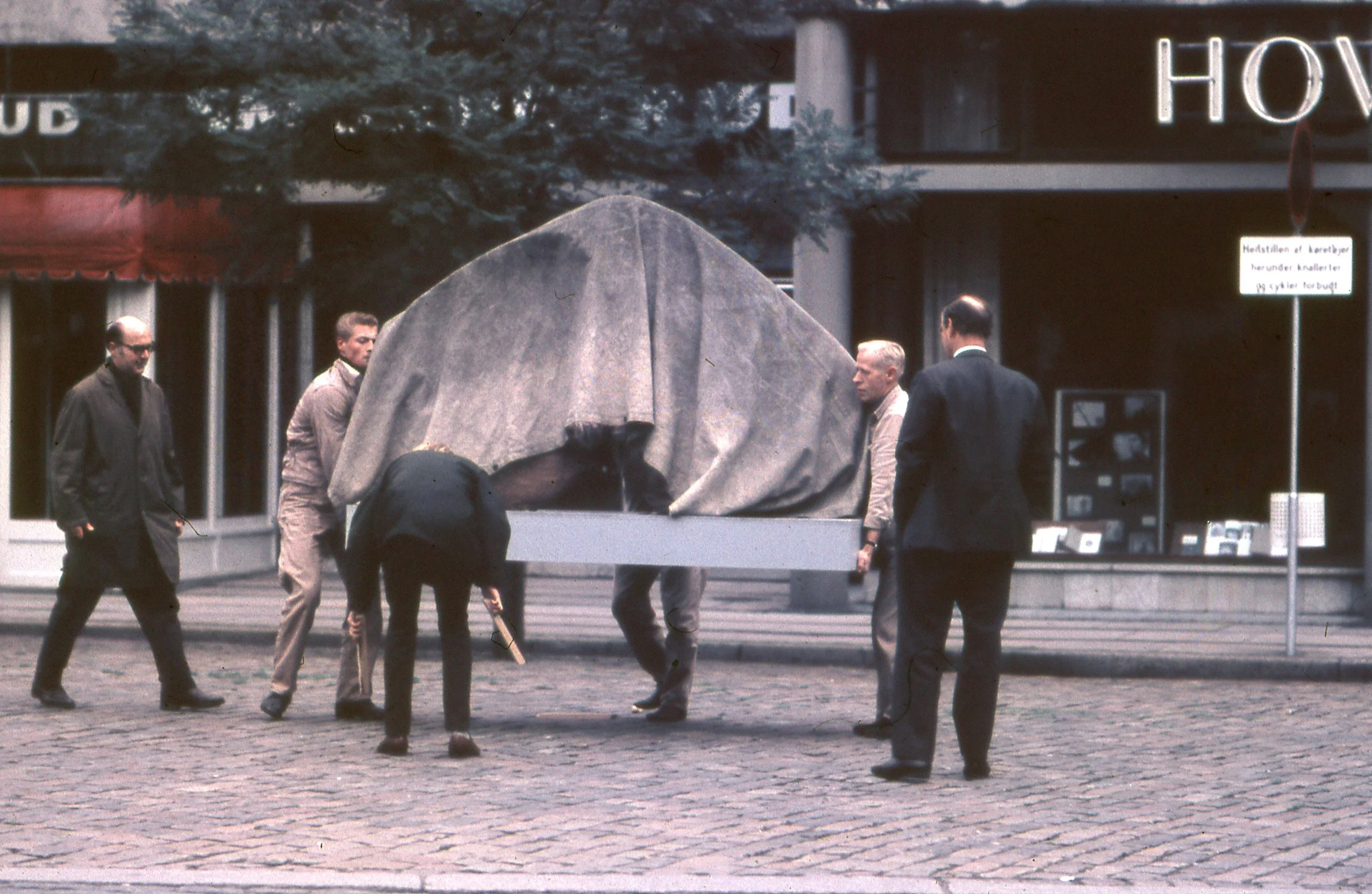
Vandkunst, which now stands by Rundetårn in the centre of Copenhagen, is undoubtedly Tinsbo’s most famous work. Many people will know this work without knowing Tinsbo himself. The sculpture was donated to the city by the Danish National Bank and initially placed in another public square, Kulturtovet in 1972.
.
The sculpture comprises a cast bronze twisted form placed on a red granite pedestal. The stone is kept constantly dark and reflective by a water feature flooding over the stone. Two contemporary reviewers remarked that the effect was to make the sculpture seem as though it might “float” above the pedestal. Politiken’s critic described that the sculpture seemed to “live and move as one looks at it”.
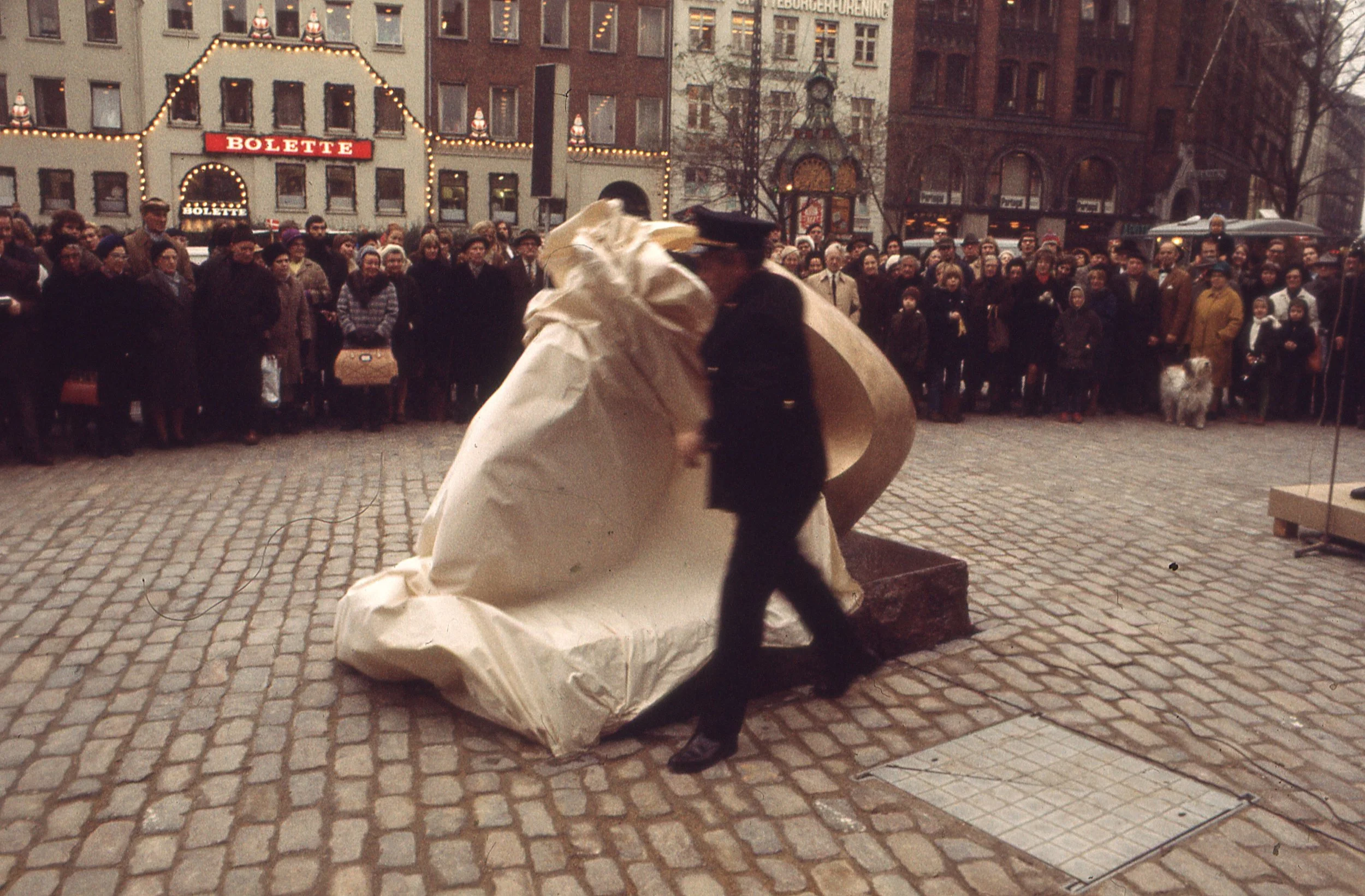
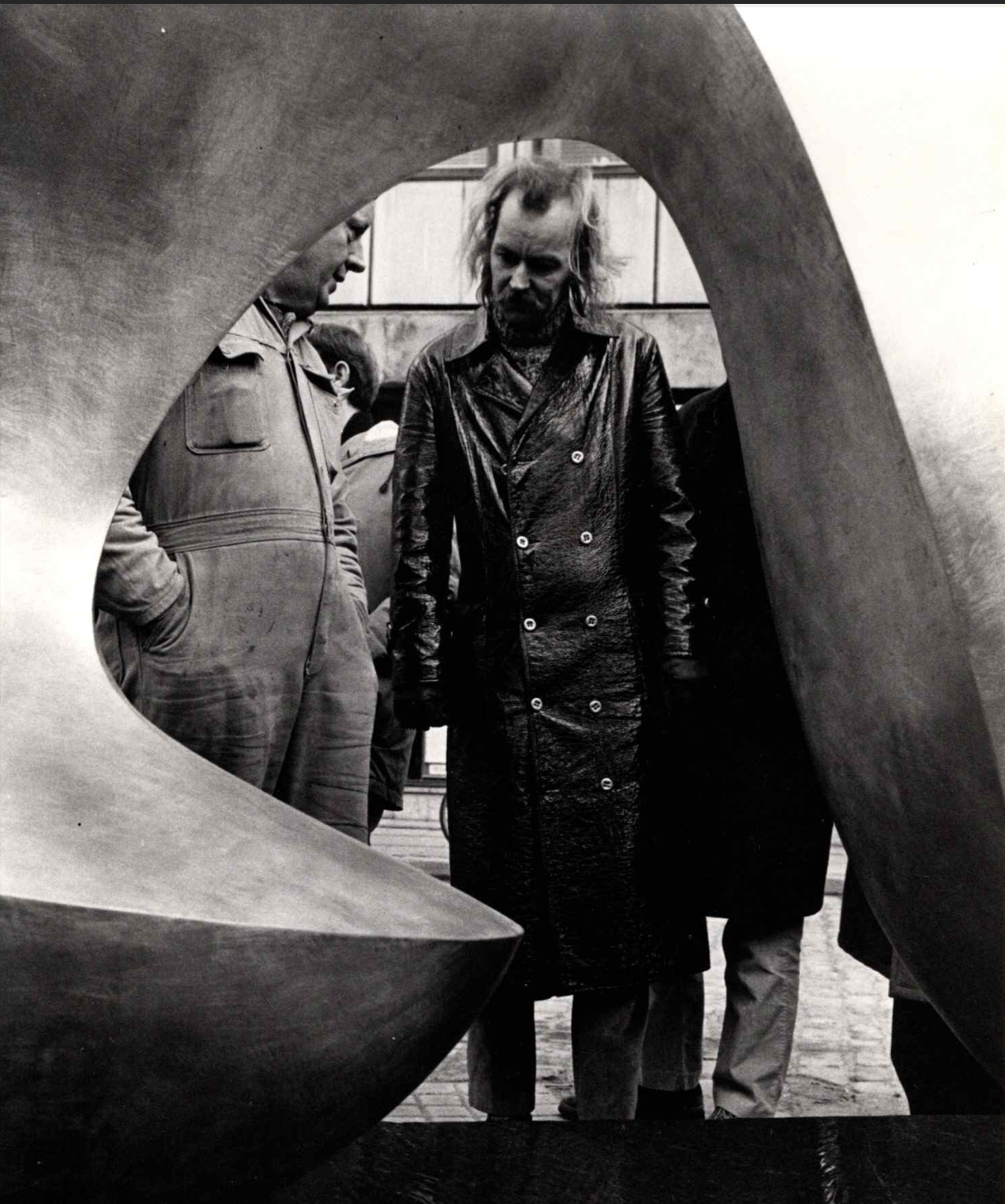
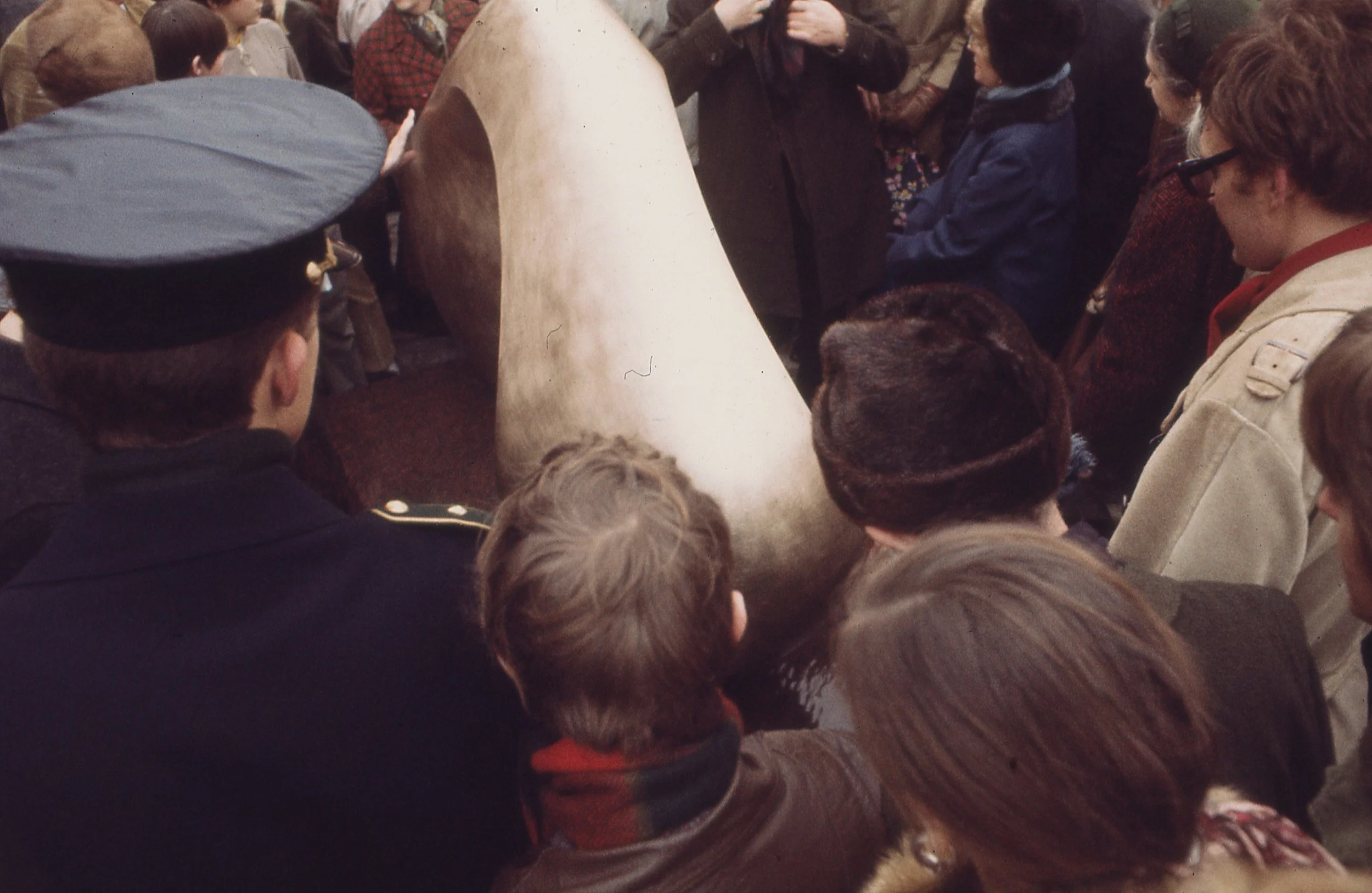
It was unveiled with much fan-fare, a cloth covering pulled off by uniformed men and besuited officials in front of a gathered crowd of Copenhageners standing at a respectful distance.
Tinsbo had envisioned a sculpture that “collaborated with the square,” that was “part of a living environment.” He wanted it to stand alongside “hotdog stands, flower vendors [and] fruit stalls.”
Initially, he was disappointed. He felt that his sculpture, which was smaller than he had intended, and not placed as he had wished within the public square, would never be accepted as a part of the social life of the city. Tinsbo described the sculpture as “turning its back on” the square, to "preserve its own life within itself.”
Over time however, the sculpture settled in and the square welcomed it.
In a photograph preserved in Tinsbo’s personal archive, likely taken by the artist, we see the fulfilment of his hopes.
The fruit stalls have materialised. Behind the bananas and the granny smith apples, Tinsbo’s sculpture peers through. On its outward face, a white graffiti tag is visible.
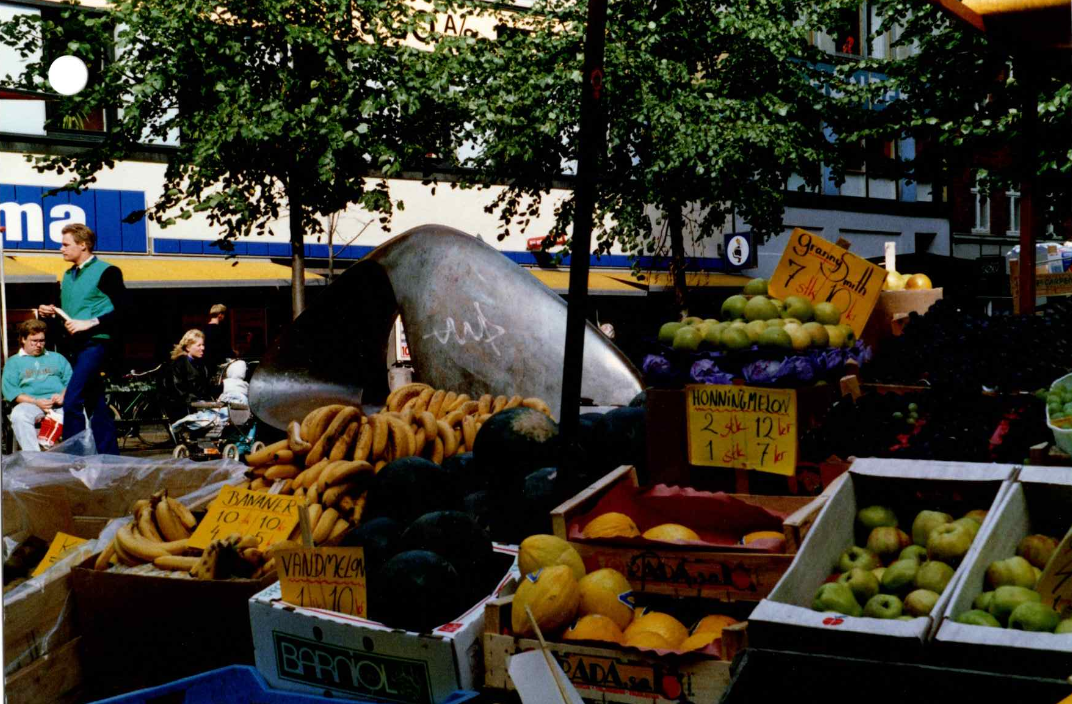
Graffiti has always been part of Vandkunst. The ghosts of tags past are visible today, where the pressure washer has polished the bronze. Tinsbo himself celebrated the graffiti in a later interview as an expression of “spontaneous joy”.
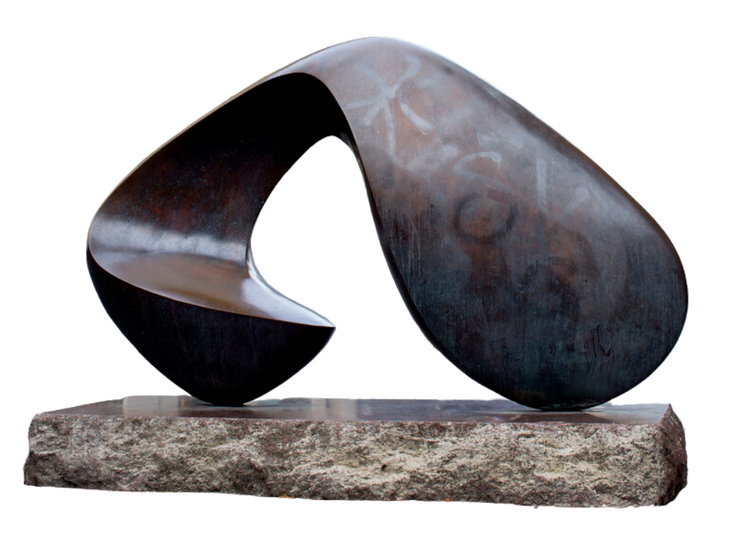
Crucially, passersby don’t seem to register the sculpture, it has become part of the square. Space had not only breached the object, but the sculpture had opened up to the world around it. The boundaries between the lump and the hole, between mass and space, between art and the world, were becoming thinner and more elastic.
Rather than remaining art placed in the city, an outpost of the gallery in the real world, it became, and still is part of the city.