Light Art
The lump has disappeared. The hole has expanded voraciously. The edge has become a line, and the line has become digital and even autonomous. All that was left for Tinsbo was to expand his idea of sculpture into space, dissolving the boundaries between the two through the creation of immersive environments and installations. Through lights and mirrors, the sculpture shatters and multiplies.
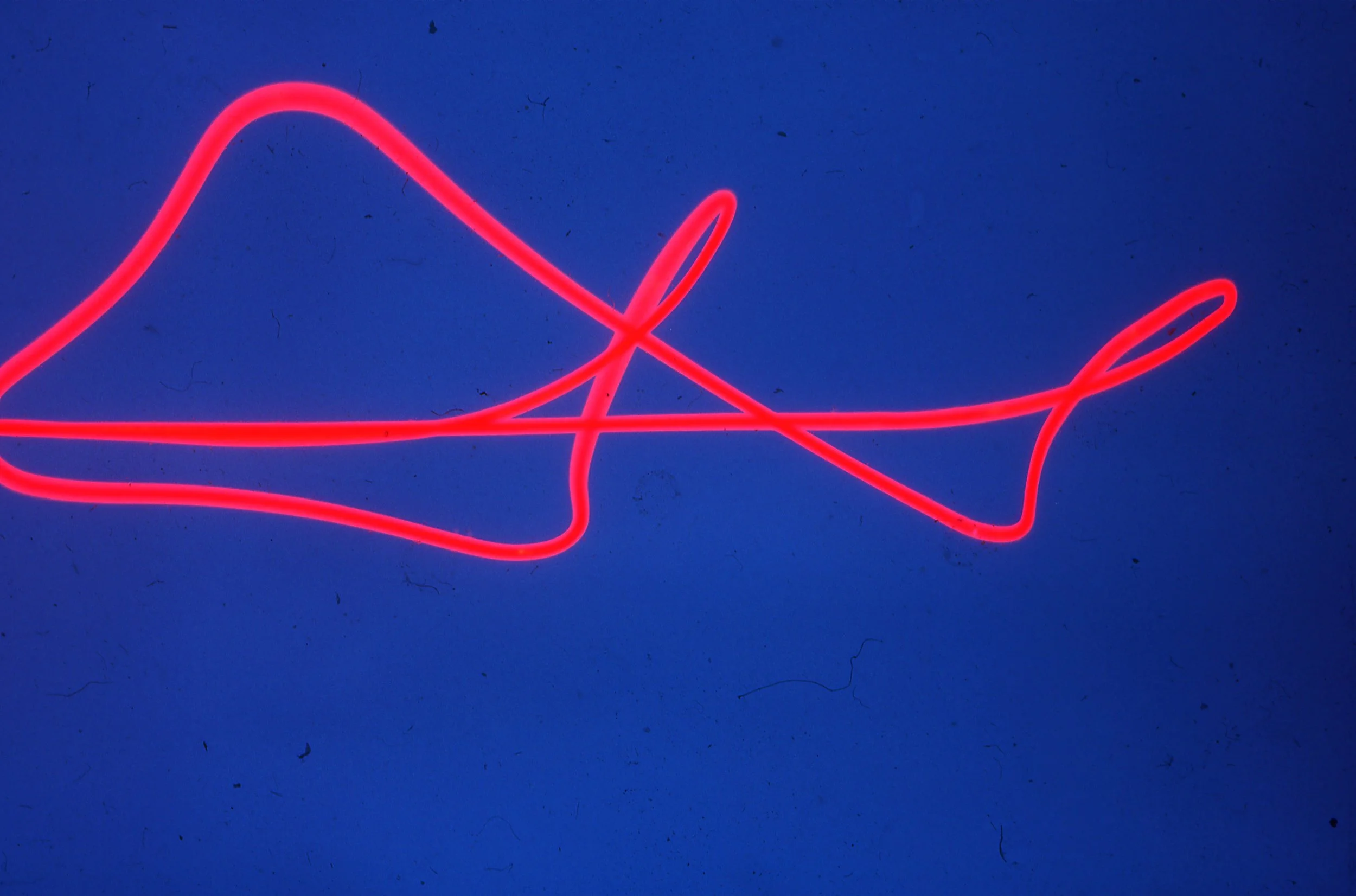
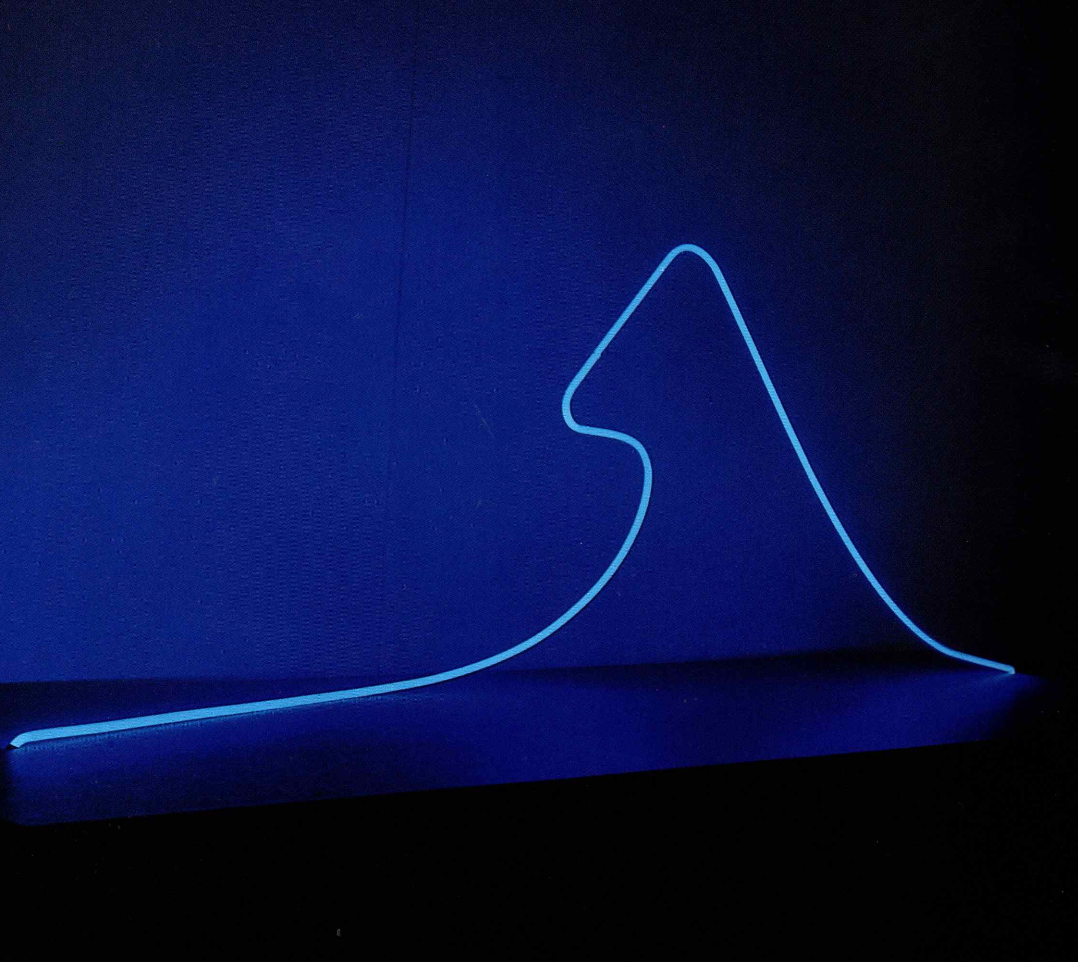
In 1977, Tinsbo entered a collaboration with the light artist Flemming Brantbjerg (b. 1947) which lasted until 1984. Together, they distilled the forms of Tinsbo’s sculptures into neon tubes.
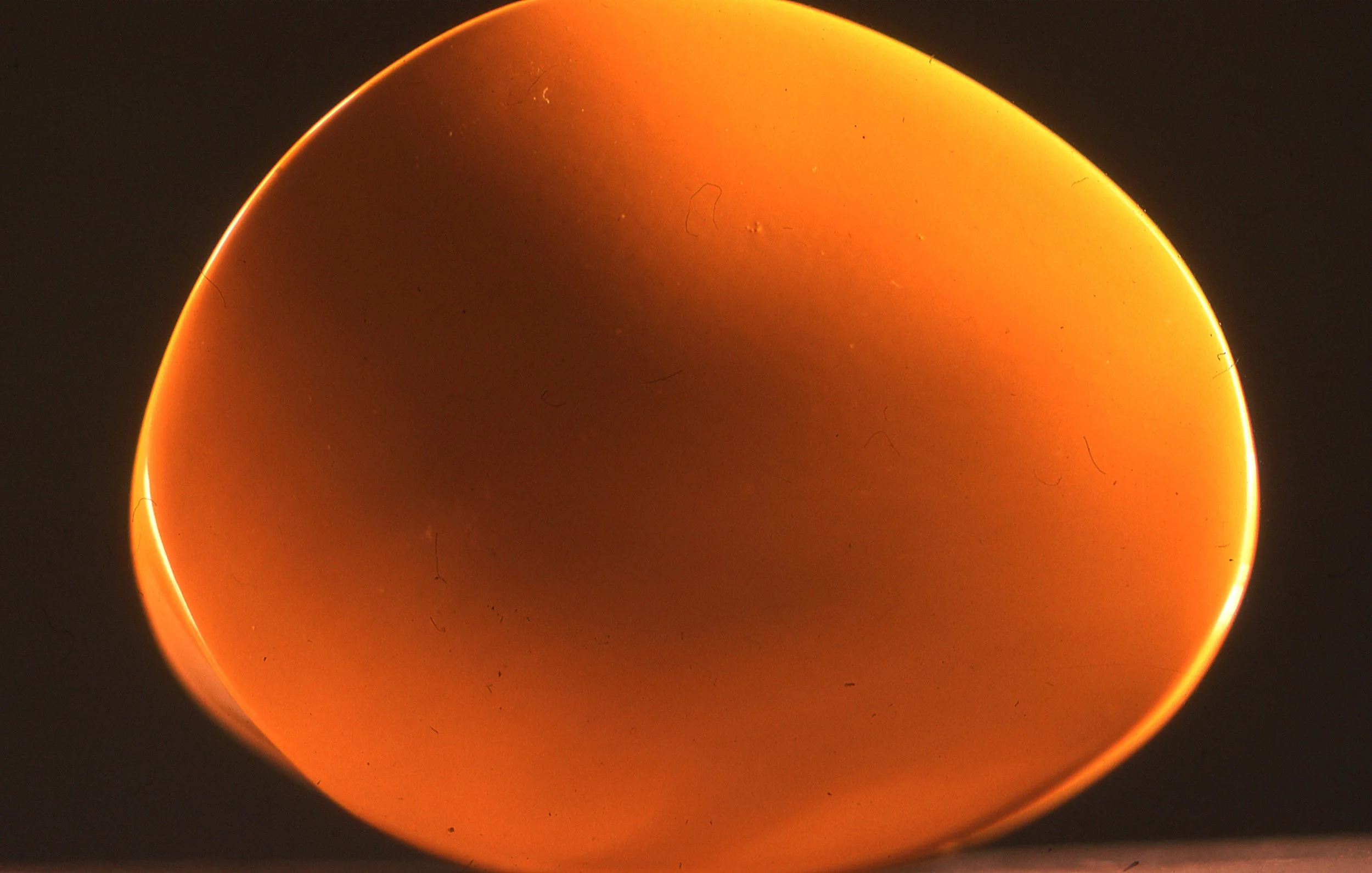
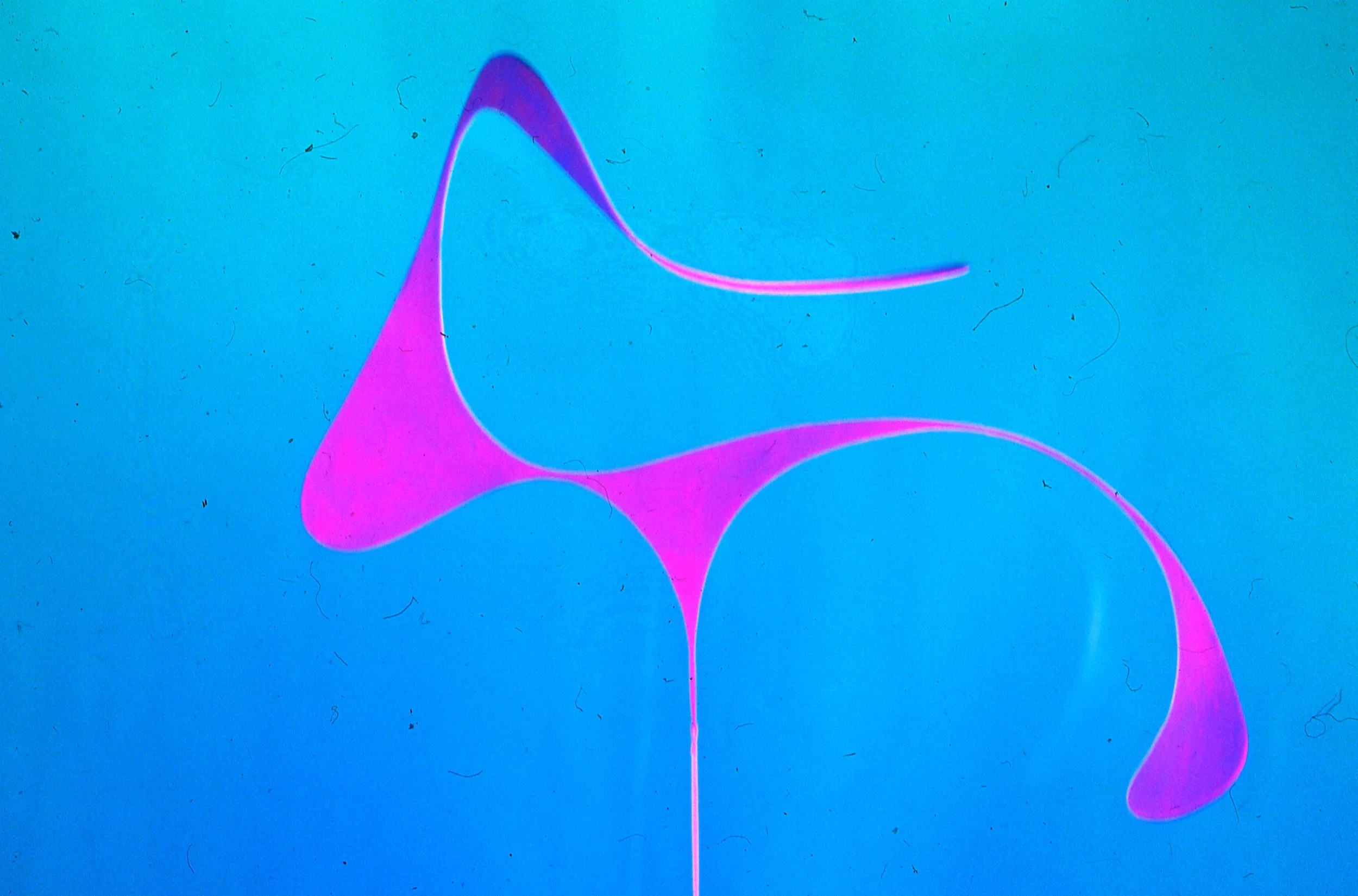
In this medium line becomes a glowing tube of light in the darkness, so bright, it seems almost like a negative space. The glow of the neon tubes draws the sculpture beyond itself and onto the floors, the walls, the viewer. Lars Schwander declared that with these and other installations, Tinsbo had been attempting to “abolish gravity” altogether. Building on the weightlessness of the mobiles, and the intangibility of the digital line, these light works emanate outwards rather than being pulled downwards by gravity. The space becomes the work.
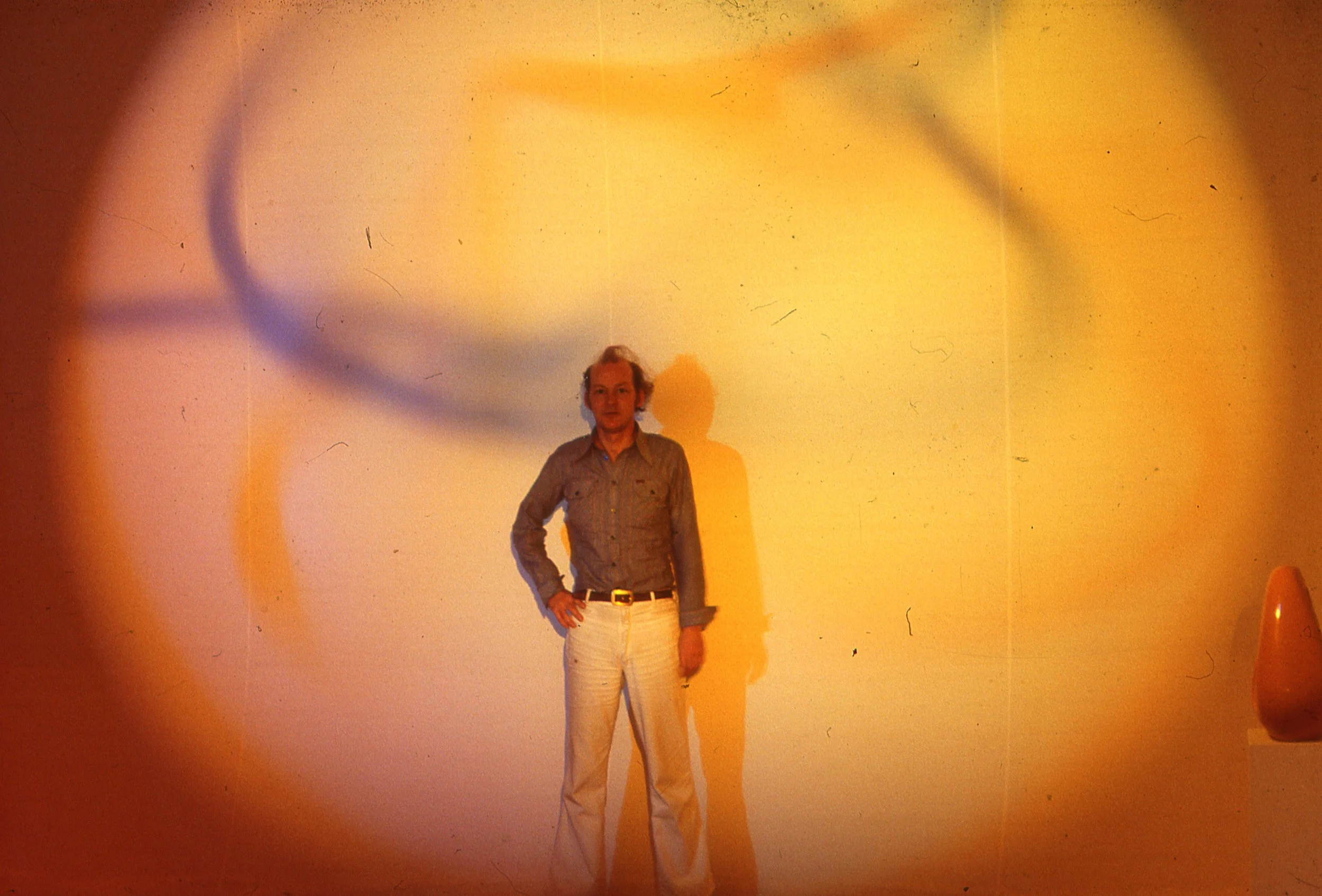
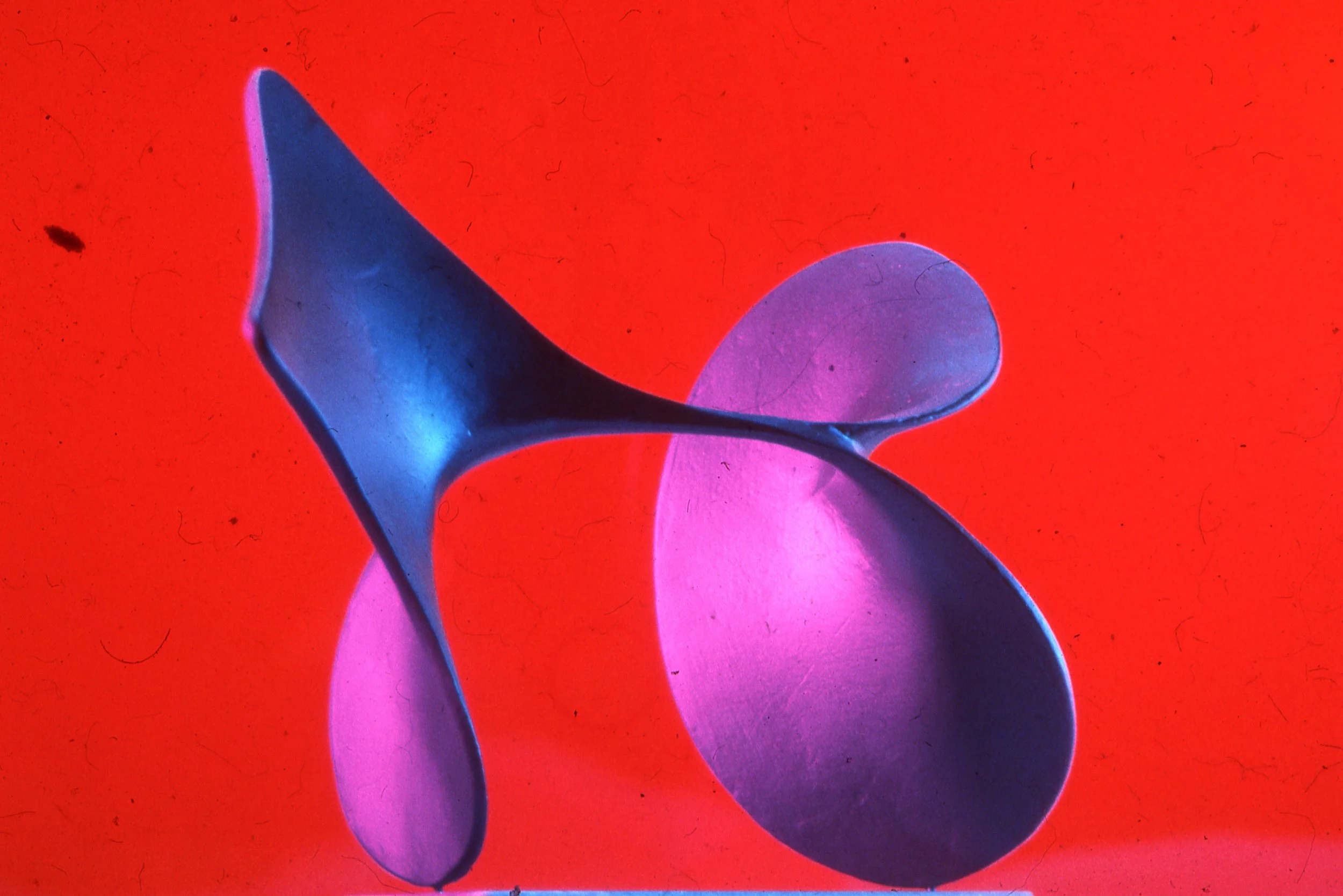
Tinsbo and Brantbjerg worked on an ambitious immersive exhibition in 1979, titled Formen som Rum at Fyns Kunstmuseum. In one of the rooms, a cabinet with mirrors on the inside of it was illuminated by coloured and flashing lights. Through the openings of the cabinet, the light, bouncing off the mirrors, was reflected into the space. In the space itself, several of Tinsbo’s more traditional sculptures were placed. The sculptures were fragmented as their different faces were illuminated by the flickering lights. They cast shadows on the floors and walls, creating duplicates and triplicates of their form.
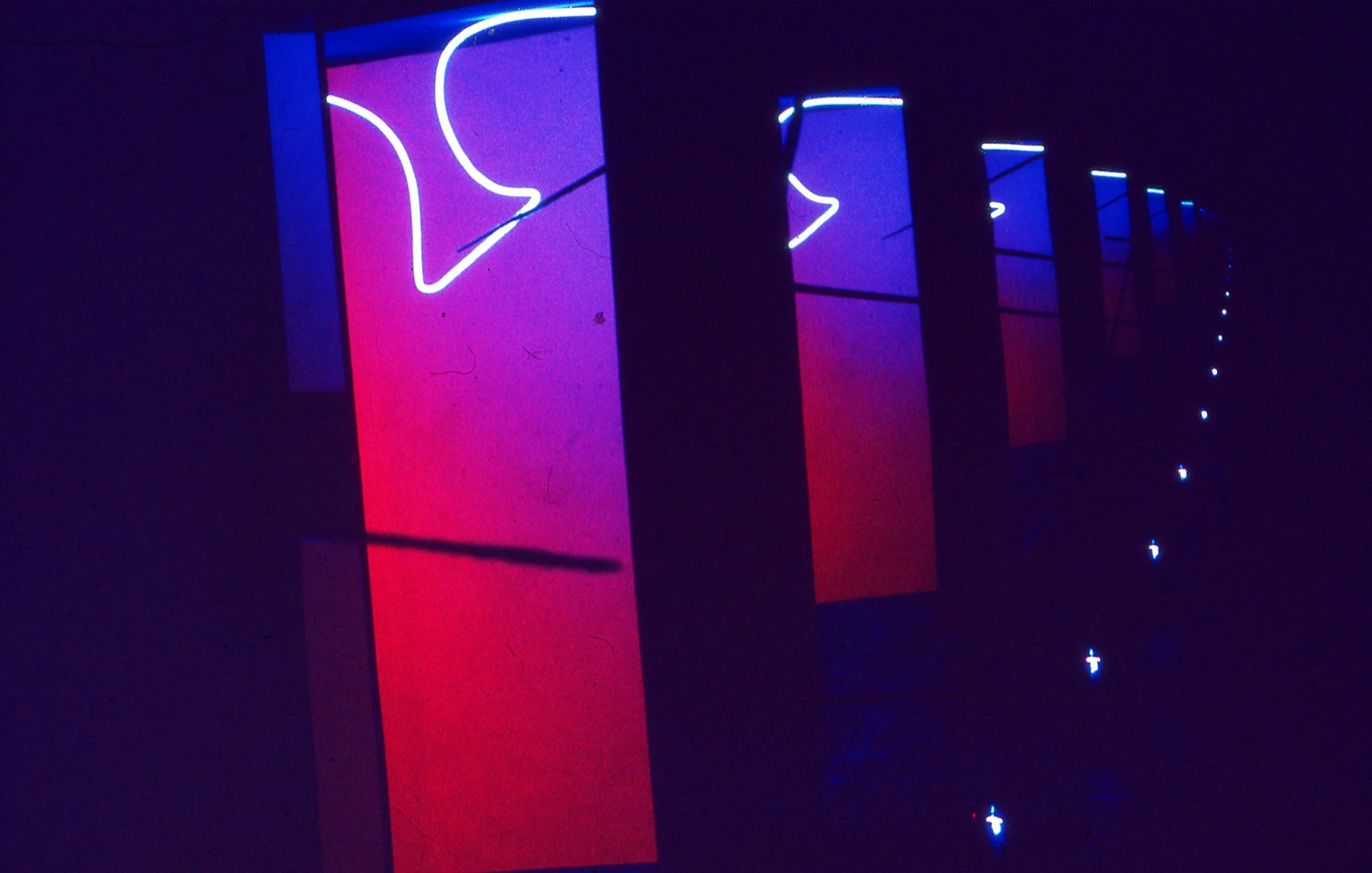
With this installation, Tinsbo tests a conviction he first articulated when discussing the graffiti on Vandkunsten. Tinsbo declared that his sculpture was, above all, resilient. “It can withstand whatever happens to it, it could even be broken into pieces, and there would be life in all the small pieces. And it must be able to do that.” With his installation, he puts this conviction to the test, revealing that the sculpture does not reside in the mass, in the lump. Instead, it is continually shattered and remade through each encounter with the space around it.
What Tinsbo was left with, was really what he began with; the strangeness and aliveness of space.